Mars
Mars, the fifth heaven of Paradise, is the sphere of martyrs and crusaders who died fighting for the true faith. It is here that Dante witnesses the celestial cross, a constellation of lights that gleams with the promise of resurrection, and hears the hymn of those who gave their lives for Christ. This heaven marks a crucial stage in Dante's ascent, where the theme of sacrifice for a higher cause is made manifest in a vision of radiant, singing souls.
Location and Nature
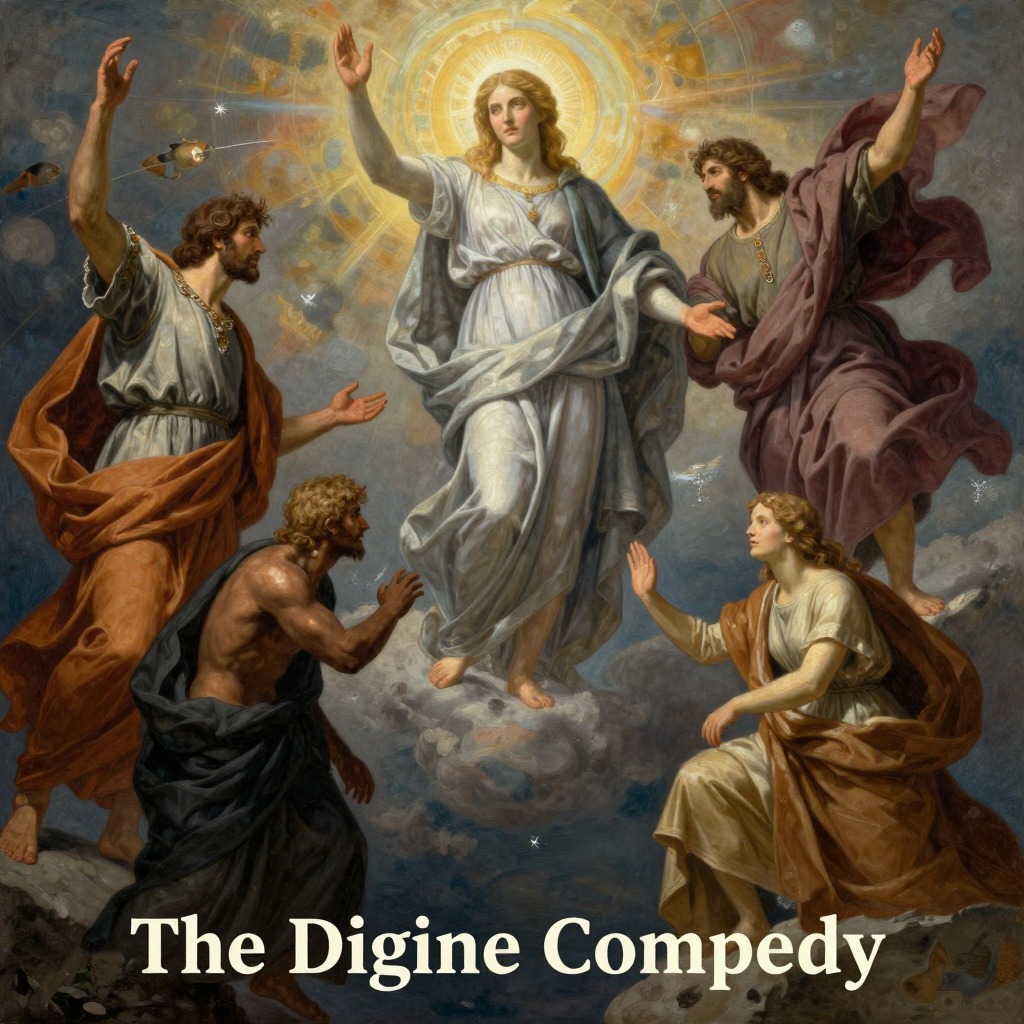
Mars is the fifth of the nine heavens of Paradise, situated between the Sun and Jupiter. It is the sphere of martyrs and crusaders who died fighting for the true faith. The heaven is characterized by its ruddy color, which appears more intense as Dante ascends. The souls here are arranged in a magnificent cross, the Cross of Mars, which gleams with the light of Christ. The cross is described as a constellation of lights, with Christ himself appearing as a levin (lightning) within it. The souls move along the cross, singing a hymn that Dante cannot fully distinguish but which he knows is a song of praise.
Inhabitants and Their Stories
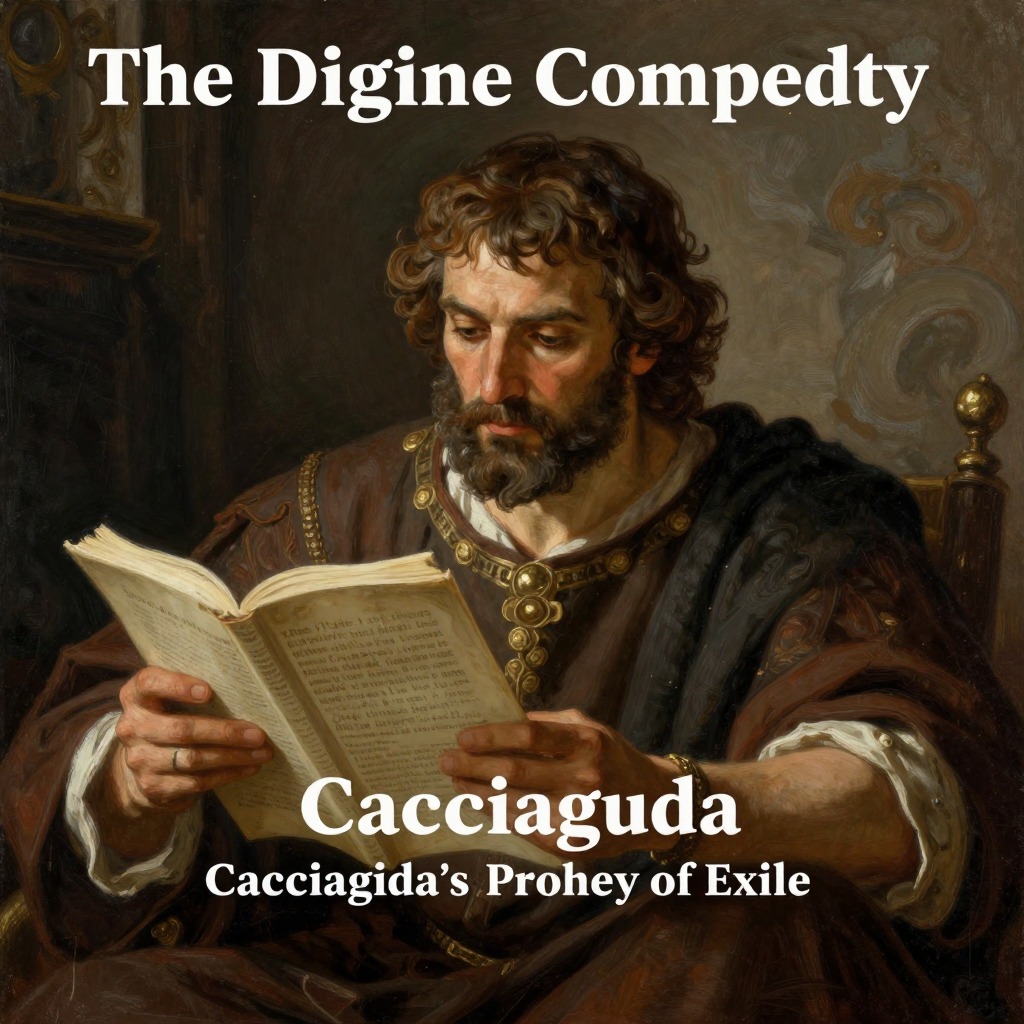
The souls in Mars are those who gave their lives for the faith. Among them are Joshua, Judas Maccabeus, Charlemagne, Orlando, Godfrey of Bouillon, and Robert Guiscard. These figures are presented as warriors for Christ, their deeds celebrated in the celestial cross. The most prominent soul is Cacciaguida, Dante's great-great-grandfather, who appears as a star moving along the cross. Cacciaguida tells Dante of his own life as a crusader who died fighting for the faith, and he prophesies Dante's exile from Florence. He also describes the noble families of old Florence, contrasting their virtue with the corruption of the present day.
The Celestial Cross and the Hymn of Resurrection
The central vision of Mars is the celestial cross, a constellation of lights that forms the shape of the cross. Within this cross, Christ appears as a levin, a flash of lightning. The souls move along the cross, singing a hymn that Dante cannot fully understand but which he knows is a song of praise. The cross is described as a constellation of lights, with the souls moving like particles of light. The hymn they sing is one of resurrection and victory, a foretaste of the final triumph of the faithful.
The Prophecy of Exile and the Theme of Sacrifice
Cacciaguida's prophecy of Dante's exile is a central moment in Mars. He tells Dante that he will be forced to leave Florence, that he will taste the bitterness of another's bread, and that he will find his first refuge with the Lombard lord, Bartolomeo della Scala. This prophecy is a key part of Dante's own story, linking his personal fate to the larger theme of sacrifice for truth and justice. The souls in Mars, who gave their lives for the faith, serve as a model for Dante's own willingness to suffer for his convictions.
Narrative and Thematic Significance
Mars is a crucial stage in Dante's journey, where the theme of sacrifice for a higher cause is made manifest. The celestial cross and the hymn of resurrection prefigure the final vision of God in the Empyrean. The encounter with Cacciaguida provides Dante with a personal connection to the past and a prophecy of his own future, grounding the cosmic journey in the poet's own life. The heaven of Mars thus serves as a bridge between the earthly and the divine, showing how the sacrifice of the martyrs is transformed into eternal glory.